
Spielberg’s Messiah
Delicately Detangling Disclosure Day Discourse re: Depicting Destruction Discriminately

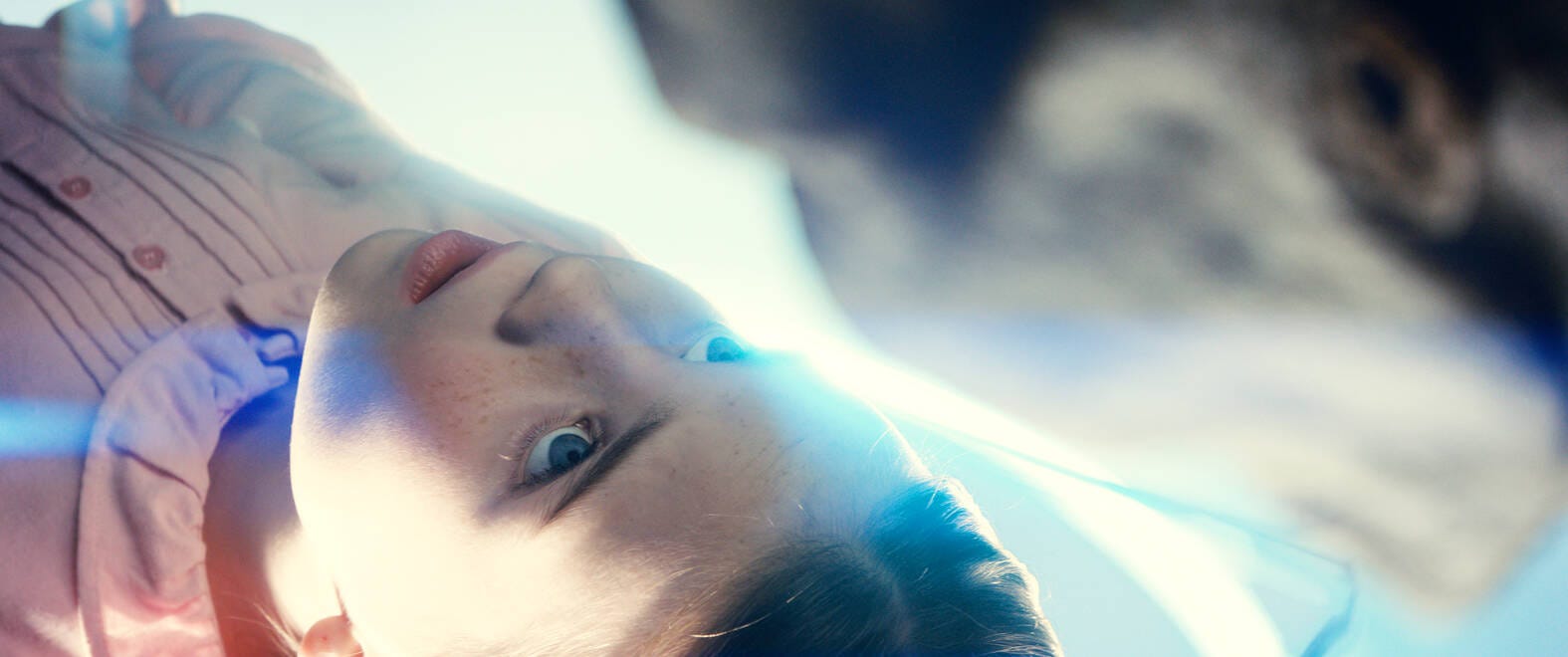
If you don’t fuck with Disclosure Day, that’s cool. I’m cool with it. Honest. I get it. There’s a lot about it that’s pretty hard to fuck with. The dialogue is frequently clunky. The villains are all ludicrously stupid. It’s stuffed with underbaked ideas and offputting, unexamined implications.
But despite all this, I still found myself totally entranced. About half of that was predicated on Emily Blunt’s performance— woah! I couldn’t tear my eyes away! I also have a fondness for Spielberg that isn’t rooted in nostalgia. I came late to Steve, and even when his stuff doesn’t work for me, it’s always at the very least interesting. And Late Spielberg especially. The Fabelmans is a century-defining masterpiece! I was primed and readied to have my shit rocked by Disclosure Day, and rock my shit it did!
I love a chase movie, and I love an unravelling mystery. Whatever you think of the story, Steve’s still Steve. The direction is propulsive and inventive. There are some lovely shots in this. The camera even moves! It had me in a blissed-out viewing state where my mind was always whirring, trying to solve the next leg of the conspiracy, excited about any surprise. It’s frequently brilliant when you allow yourself to get swept up in the action. The train scene! Fuck. The false house! The ending is totally crazy, but sue me, it sold me. And O’Connor and Blunt’s relationship is moving without ever getting treacly, remaining fraught and ambiguous in a way that really affected me.
I love all its bizarre idiosyncracies, too (though I can imagine them being intolerable if I was in a less generous mood). There’s a lot about this movie that’s just plain odd. The extended bit about running over the phone. The INSANE slapstick action with the invisible firetruck. The unwieldiness of the film— the way, at times, it feels like the script and direction are battling one another— is kind of why I enjoy it so much. I still can’t get my head around the whole thing.
But, okay, outside of the actual scene by scene mechanics of the movie, what is it about? What’s Steve saying? What’s his “take” on “modern life”? I find myself pretty tired by questions like these, even when they nag at me. What a boring way to approach a movie, trying to distill it into a single message. Is Dreamworks a feminist? Is Sammy Fabelman my friend? This is where I think a lot of critics— both positive and negative— get tripped up by Disclosure Day, because the most common interpretation is one that’s pretty gauche: “Empathy Is Good And Necessary.” BOOOO!!!!!! YAWN!!!!!!!! TRITE!!!!!!
…But I don’t think that’s all that’s going on here.
Movies about robots are pretty much always about the same thing: the relationship of humans to God (and sometimes, in parallel, the relationship of the child to the parent)1. Movies about aliens are a lot more nebulous with their metaphors. Because aliens are… well… alien, they can easily be slotted in to represent anything that is fundamentally unknowable and incommunicable. In Wes Anderson’s Asteroid City, the Alien is death, disruptive and absurd— but not sinister. In Gregg Araki’s Mysterious Skin, the mythology of the alien abduction is transfused into a reckoning with the unspeakable, repressed hauntology of childhood sexual abuse.
We could even narrow the field to just Spielberg himself. In War of the Worlds, the alien is a product of the 9/11 age, the frightening unknowable Otherness of a wartime enemy; the film is reflective of the civilian experience in any war (their literalized thirst for blood as fuel is chilling), but in the context of its time, the film’s antagonists are the inhuman disruptors and destroyers of “normal” American life. I haven’t seen E.T. but presumably it’s about the incommunicable wonder of childhood? I dunno. And Close Encounters, which I talk about a lot more here, is about the ecstasy of change. Close Encounters’ alien is an epiphany, one that resists symbolic specificity. It is newness. A veil lifted. It is an escape more than anything, a breakaway from the miserable dead-end structures of human life, most notably the heterosexual family. (The Freudian recontextualization of Spielberg’s ouvre provided by The Fabelmans has been coopted as a lens through which to reread every one of his films. Sometimes this is awesome and revealing! But sometimes it’s way too simple. There’s a recent sneering Hot Clever Take going around that Encounters’ protagonist is actually BAD and EVIL for abandoning his wife and kids, and if you read the movie this way I’m sorry but we are fundamentally different kinds of people. You are spiritually deprived.)
But if Close Encounters is about the ecstatic truth, Disclosure Day works in direct contrast to illuminate the terror of knowledge. It is not easy. It is not joyful or brilliant or symphonic. It isn’t rewarding at all. Maybe this sounds strange, but I think there’s actually very little hope at the core of this film!
We should probably skip right to the ending. It’s the most contentious part for audiences and critics, and rightly so. It’s a very difficult bit of filmmaking, relying solely on back-and-forth cuts between images of suffering and images of people tearfully viewing (consuming?) that suffering. The acting on everyone’s part is tremendous, and the sequence is cunningly directed, but I get why people have fundamental problems with it.
Susan Sontag’s Regarding the Pain of Others is a crucial text here (and for a lot of Spielberg’s work): “…in a world saturated, no, hyper-saturated with images, those that should matter have a diminishing effect: we become callous. In the end, such images just make us a little less able to feel, to have our conscience pricked.”
Because… so much of what’s being shown is already so obvious to us. These are images of the US government and its subsidiaries torturing living beings for their difference. Um, yeah, Steve. We know. We’ve seen this before. We’ve seen REAL photos of this stuff. We see it every day! Suffering has been a cottage industry of imagemaking since the image was invented. The most recent and obvious parallel would naturally be to the images of ultraviolence and suffering inflicted on Gazans over the past few years, filtered and dissected via Instagram Reels, impossible to look away from and sickening to sit through. I immediately thought of the photographs of the tortured prisoners at Guantanamo Bay. Or you could sub in filmstock of factory farming, or a scroll through the Epstein files, or evidence of war crimes in Vietnam, or the shadow figured of Hiroshima, or, or, or… There is nothing groundbreaking about this scenario. How could Spielberg actually think this would make any more of an impact on humanity than the hundreds of other times this exact thing has happened! What, just because the bodies are literal aliens, suddenly everything would change? It’s like how people view the death of imaginary dogs as sadder than the death of real people. Oh, this is what we should be outraged by? This is what proves humanity has Gone Too Far? As if anything could shock us anymore! The world is so much darker than a bit of light alien torture. These images in comparison are so petty and toothless and small!
So says Sontag: “For the photography of atrocity, people want the weight of witnessing without the taint of artistry, which is equated with insincerity or mere contrivance.”
So I get it if it feels tasteless. But I don’t think Spielberg is being prescriptive or naive, here. The ending is deeply ambiguous! There is absolutely no sense that this has healed the world! Does the broadcasting of this information, of these images, make us better? Does it even matter? The world is already ending. Are we the centre of the universe, that we should only approve the existence and promotion of knowledge that improves our lots? Listen. How much power does that command have? Maybe we do listen— now what? All we ever do, up here in the imperial core, is listen, and watch the footage on a tiny screen, and wonder what to do, and then in the end do nothing. I can very easily imagine the Earth of Disclosure Day being reduced to a nuclear wasteland, oh… twenty minutes after the cut to black?
So where’s the hope in this hopecore? Where is the untroubled belief in goodness? Not here. We do not see a healed world, only a caught one. So why is everyone tripping over themselves to say that this movie made them believe in humanity, or conversely that suckling on the teat of “empathy” is politically rancid, or that Spielberg thinks Palestinians are aliens (?), or that people who don’t like this movie clearly just don’t have the capacity to feel emotion?
I’ll get there. But first, I really need to talk about Jesus.
Margaret Fairchild is one of this century’s great characters of fiction. I would put her up there with Lydia Tar, Syril Karn and Madame Web. I can’t stop thinking about her. Maybe that’s the main reason the movie worked for me— I just really loved getting to hang out with her. I would have watched five hours of Margaret Fairchild doing her thing. Everything about her character is entertaining to me.
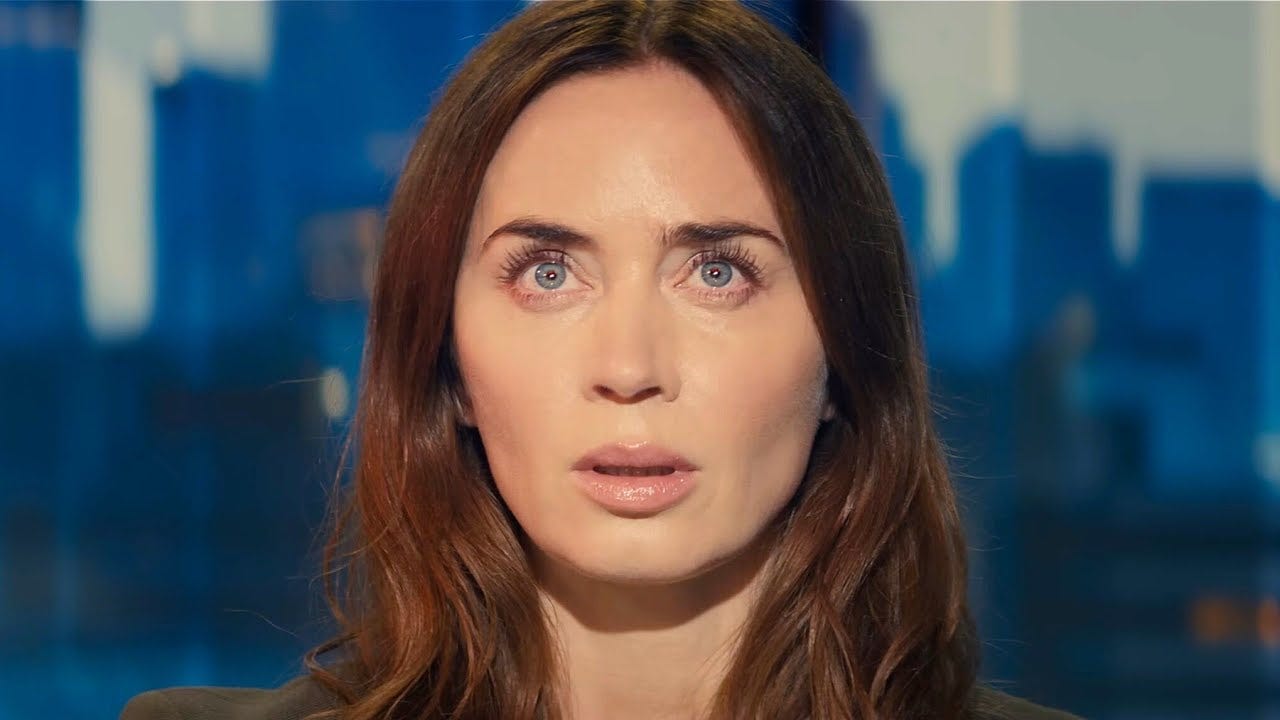
You go in thinking that it’s Josh O’Connor’s movie— he’s the hero, the main guy, he’s smart and self-sacrificing and quietly anxious and loves his girlfriend and he’s a man! And yeah, I like him. But I don’t remember his name. He’s no fun. He gets outserved by my perfect wife Margaret at every stage!
She’s a flop newscaster. She has a seemingly unlimited interior design budget. Her plastic surgery is canonically addressed. She has an unsettling stare and a can-do attitude and horrible music taste. She has been saddled with a lameass guitar-playing ugly fucking boyfriend. She has like a hundred unpaid speeding tickets. She’s not particularly clever or nice. Everyone thinks she’s kind of grating.
She is also, kind of, Jesus Christ?
Sidebar for a second: this movie is bafflingly concerned with Catholicism. Is it a course correction after The Fabelmans? Did Tony Kushner kush too hard? I’m not sure about the religious background of screenwriter David Koepp, but Disclosure Day feels like it could be Spielberg’s least Jewish movie ever. Why are we so concerned about the existence of aliens possibly disproving that mankind is God’s specialest little boy? Only Christians care about that stuff. Did we really need a nun to turn to the camera and say “don’t worry, aliens are God’s creatures too”?
Jane says this interesting thing near the beginning of the movie, admitting she left her nunnery not because she stopped believing in God, but because she “no longer thought that God was divine”. This is never acknowledged again because they do NOT have time to get into all that. I wish they did, though, because the implications are revealing!
The most commonly understood “requirements” of God are omniscience, omnipotence and omnibenevolence. I think Jane’s issue is meant to be with God’s supposed benevolence. (Siri, why does God allow suffering?) Divinity is a strange word choice for that, though. Could she instead mean that she no longer thinks God is meaningfully separate from “regular” existence? What if God was one of us, just a stranger on a bus, et cetera. Now that certainly has implications for the rest of the story.
Whatever you think of the concept of God, surely it’s also necessary that it is unknowable. That’s why the concept works! It doesn’t rely on proof whatsoever. Religion creates an epistemology that allows for truth without reason. It is a knowledge that can’t be learned. That’s what faith is.
Disclosure Day is about what is unknowable becoming (proveably) known. Aliens end up being pretty good representations of God, then! Or else the opposite. There’s a reading of this movie that it’s about the world coming to terms with the nonexistence of (our conception of) God. There’s too much suffering, see? Look at it. Look at what we’ve done. What supreme being would justify this? Contend with proof, for once. With our arrogant assumption that we are at all important to the universe! Will this truth set us free? Maybe it doesn’t have to. Spielberg seems to have his own blinding faith— in the intrinsic value of knowledge, of data, of truth, even if it hurts. Even if it kills us.
The aliens of Disclosure Day gift Margaret and Josh-O’Connor-Character with extrahuman powers of knowledge. Josh (sorry, I seriously don’t remember his name) literally gets to speak math, the source code of the universe, and is able to facilitate communication between humanity and the aliens. My beloved Margaret, however, receives the power of Empathy.
The movie talks about Empathy a lot. CRINGE! The word is essentially meaningless in a Woke-2.0 World. It’s been run through. Does it mean listening? Does it mean being nice? Sharing is caring? Put yourself in somebody else’s shoes? Believing in the inner goodness of the human soul? Is it feminine intuition? “Have empathy” is an insanely trite thing to say nowadays because to the vast majority of people it is functionally meaningless.
But Margaret’s empathy isn’t a blessing at all, it’s a curse. That’s the genius swerve. She hates it! It’s incredibly frightening and even disabling! Because her empathy is total— it’s not “empathy” as therapyspeak understands it, but utter omniscience of the totality of every human soul. Every horror and sadness everyone has ever felt, every cruelty they’ve committed, every love they’ve lost. (Joshy2 finds his advanced knowledge to be a curse, too— can’t relate to anyone, has to drop out of college, tries using it for good one time and is manipulated into serving an evil corporation for the rest of his life…)
Margaret’s omniscience hurtles her into the role of the Messiah. The world is in her hands. Christians bow to her! Wasn’t that Christ’s ultimate power, too? The empathic connection to all of humanity, the knowledge and burden of the world’s collective sins? Knowing just the right way to heal a broken soul. I will not be anyone’s religion, she cries.
Pretty incredible development for a character who started out so mundane, almost frivolous. Maybe she’s messianic, but she’s still wonderfully and frightfully human. Remove that humanity at your peril. It’s precisely her rejection and terror of the power she holds that helps the film transcend easy readings of its perspective on humanity and empathy.
The problem with the “hopecore” readings of the film is the framing of radical empathy as a process that is necessarily beautiful and redemptive. As something uncomplicatedly Good and Kind. But total empathy, as the film calls for, means the naked understanding of every sick, depraved, cruel, violent feeling— not just seeing the inner goodness, but more crucially the inner dark. It’s frightening and awful to understand the totality of the human psyche, it may even make us worse! But— Spielberg argues— it is necessary.
The aliens of Disclosure Day are incredibly manipulative. This is disturbing! Another big pain point for critics of the film is the abduction scene. Something cruel and violent happens to these children3, but it’s framed as necessary, as unlocking their gifts. So… childhood trauma is actually awesome? What the hell, Steve?
It’s not really that simple. The film allows the scene to be terrifying. It allows the trauma to play out on their faces. It allows the aliens’ gifts to ruin Josh and Margaret’s lives forever. Maybe they accept their fates and their powers, but I don’t think that means the film thinks what happened to them is ‘good’. Notice that the whole recreation takes place on a film set, that Colman Domingo is sprinting around like a First AD. Notice the aliens weaving their own images to lure in these children, fairytale scenes, jarring and uncanny, a Kincadian blizzard with Disneyfied talking animals— as it was written, for them, all for them.
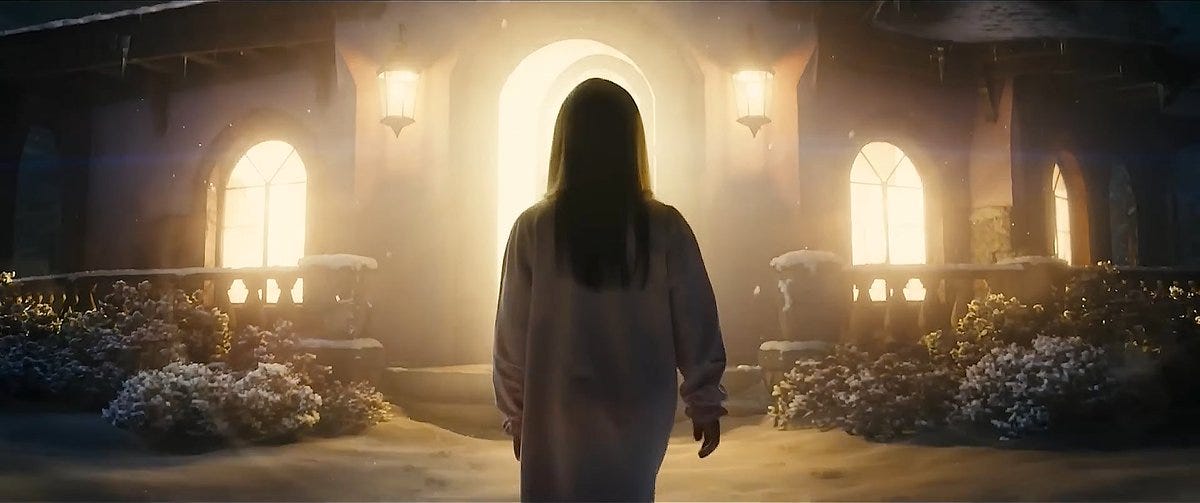
This is Spielberg acknowledging, in his way, the inherent manipulation of the image. Which must be incredibly relevant to him, the master manipulator of filmmaking himself! Here the film becomes a terrifying act of self-reflection. The Fabelmans is an obvious keystone here, too— Spielberg is fully aware that his filmmaking falsifies, dramatizes, carries unconscious meaning even he may not fully understand. And that will naturally provoke an ambivalent reaction in viewers, suspicious of how images of suffering are being “utilized”, what they are being told to feel.
The tall glistening blond boy is outlined in golden sunlight. The cues are set. The camera’s moving. Laugh! Cry! But we know what to look out for by now. Emotional strings swell, and we bristle. It’s the same way I can’t ever watch Schindler’s List. Something about even the attempt to narrativize real suffering, real horror, just makes me feel sick. It’s instinctual, I can’t control it, I can’t abide it, it’s too much. (Actually I go deeper on this exact feeling and The Zone of Interest here.) So if the alien torture of the ending sequence felt crass, obvious, even reckless, I get it. I do. That tension is part and parcel of the film, and of quite a lot of Late Spielberg.
Sontag: “Citizens of modernity, consumers of violence as spectacle, adepts of proximity without risk, are schooled to be cynical about the possibility of sincerity. Some people will do anything to keep themselves from being moved.”
Along these lines, perhaps the aliens are not meant to be gods, but photographers. The dissemination of knowledge is an inherently flawed, biased project. Any communication at all is shaped by unconscious desires, by the acts of unknown forces. And indeed most acts of image-making are intentionally crafted to spin a narrative, or else the images are later coopted to do so. All truths are constructed truths.
But they’re still all we have.
Are depictions of suffering “good”? Sontag asks the same. “What is the point of exhibiting these pictures? To awaken indignation? To make us feel “bad”; that is, to appall and sadden? To help us mourn? […] Are we the better for seeing these images? Do they actually teach us anything?”
Spielberg asserts that these questions don’t matter. There is value in the images regardless of the effect they ultimately have. Sure, they are framed, they are positioned, there is purpose behind them, but they still communicate at least part of a truth, and to dismiss that truth out of hand, as if our capacity to care is limited, as if no one has ever been impacted by an image before, or by a story, is itself a cruelty. A cruelty to ourselves, at least. Otherwise we are trapped as the silly villains of this story, zealously guarding the spread of information, only allowing what we deem to be “useful” for the “greater good” to be shown, only approving of what appeals to our lofty tastes.
It mirrors Sontag’s conclusion: “Someone who is perennially surprised that depravity exists, who continues to feel disillusioned (even incredulous) when confronted with evidence of what humans are capable of inflicting in the way of gruesome, hands-on cruelties upon other humans, has not reached moral or psychological adulthood. No one after a certain age has the right to this kind of innocence, of superficiality, to this degree of ignorance, or amnesia.”
The manipulation inherent to an image, or a film, does not give us the excuse of ignoring what it displays, or writing it off as ill-intentioned. What worth must something have, to be allowed to exist? Who decides that worth? When does the depiction of suffering become gauche— or dangerous? How many of those images can we take before we break and shatter completely? Can we build back stronger, once we know, or will the truth about our capacity for cruelty destroy us forever?
Steven doesn’t know. He just has questions. That’s all he needs. It’s the asking that counts. Listen. We have the information we need. What happens next is up to us now.
In the darkness that follows the final line, I get the feeling his hopes for us are not quite high enough.
Does anyone want to talk about A.I. can we please talk about A.I.
Seriously, what is it? James? Is it James?
I don’t really vibe with the “it’s about CSA” readings because they seem to rely on Mysterious Skin as a paratext. And it’s like… not all childhood trauma is sexual abuse, guys, I dunno. Sometimes other bad things happen.
never did i think Lydia Tar, Syril Karn and Madame Web would be in the same sentence
This is excellent